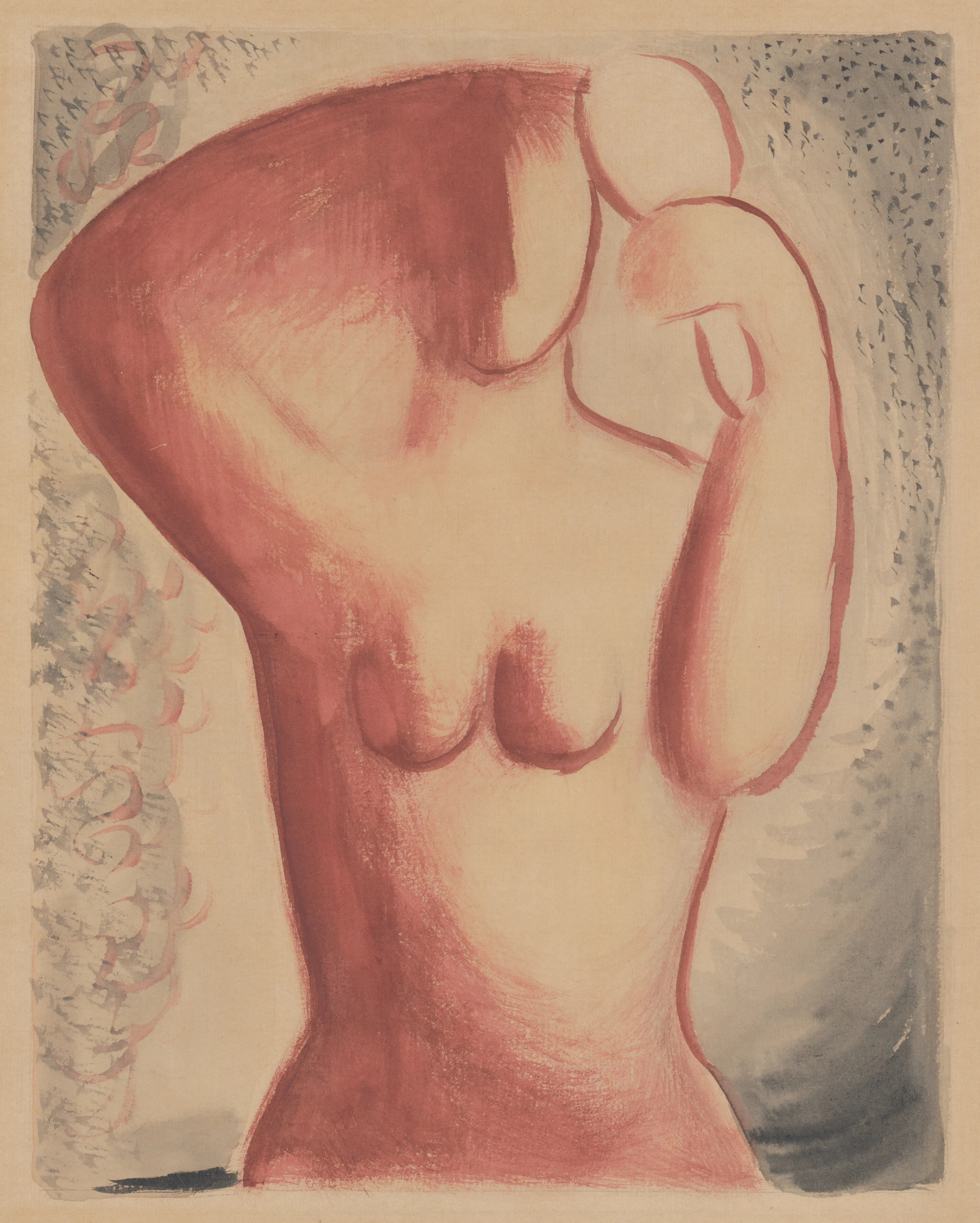
Mikulas Galanda, ‘Itching,’ 1931. Photo by Heritage Art/Heritage Images via Getty Images Breast cancer is largely considered a disease that occurs at a later stage of life. But for a growing number of women, it is arriving much earlier—when they’re building careers, raising young children, falling in love, or simply assuming they have time. Diagnoses among women under 45 increased 11 percent between 2012 and 2022, yet only a tiny fraction of breast cancer research funding in recent years has focused specifically on this age group.
That disconnect is at the heart of a new $15 million global research initiative from The Estée Lauder Companies and the Breast Cancer Research Foundation, which is linking scientists and researchers to better understand why breast cancer develops in younger women and how to detect, prevent, and treat it more effectively. Breast cancer in younger women is more likely to be diagnosed at a later stage and to behave aggressively—according to the organizations, women diagnosed before the age of 40 are nearly 40 percent more likely to die from the disease.
For Elizabeth Hurley, who has been involved with The Estée Lauder Companies’ Breast Cancer Campaign since 1995, the issue has never been abstract. At that time, she had recently lost her grandmother to breast cancer when Evelyn Lauder asked her to join the campaign for the initiative. “She said women around the world were dying from breast cancer, and no one was talking about it, and she wanted to change that,” Hurley recalls. “Nobody spoke about the disease [after my grandmother passed away]; Evelyn’s words resonated with me, and I immediately said yes.”
Nearly three decades later, the conversation has changed considerably. But the science still has questions to answer, particularly when the patient is young.
The new initiative—announced by The Estée Lauder Companies on September 23—establishes a five-year global research program that William P. Lauder, chair of the board of directors of The Estée Lauder Companies and cochair of the Breast Cancer Research Foundation, says is a continuation of his mother’s work.
“My mother, Evelyn Lauder, believed deeply in the power of research to not only change, but save lives,” Lauder adds. “She began this work with a vision to put breast cancer out of business, and for me, carrying that vision forward means asking what more we can do today to make a difference for the next generation.”
Evelyn Lauder founded the Breast Cancer Research Foundation in 1993 and was instrumental in creating the pink ribbon as a symbol of breast cancer awareness. But as Lauder puts it, “the real credit belongs to the researchers who are doing this extraordinary work, and I am enormously grateful—but the work is certainly far from finished. Our ultimate goal is to create a world where patients of any age no longer have to fear a breast cancer diagnosis.”
“Many younger people still think that breast cancer only affects older women. We know that this just isn’t true,” Hurley adds. “It’s important that younger women, indeed women of all ages, become breast aware and familiarize themselves with their own breasts. Go to the doctor if they notice any changes—early detection saves lives.”
The partnership has already directed more than $123 million toward breast cancer research, which supported at least 400 research grants. The latest commitment represents a more concentrated effort around a population whose needs have historically received relatively little research attention.
“I want this initiative to give younger women more information, more hope, and ultimately save lives,” Hurley says. “I hope it helps every young woman feel seen and know that the scientific community is working with urgency on her behalf.”
Source: ShowBiz



0 Comments